
Santee, CA · Garage Door Service
Why So Many Santee Garage Doors Predate Insulation Rules
Most Santee homes went up between 1967 and 1992, median 1976, long before stricter insulation rules - here's what that means for the door on your garage today.
- Repairs & new doors
- Springs & openers
- Serving 5 nearby communities
What Most People Get Wrong
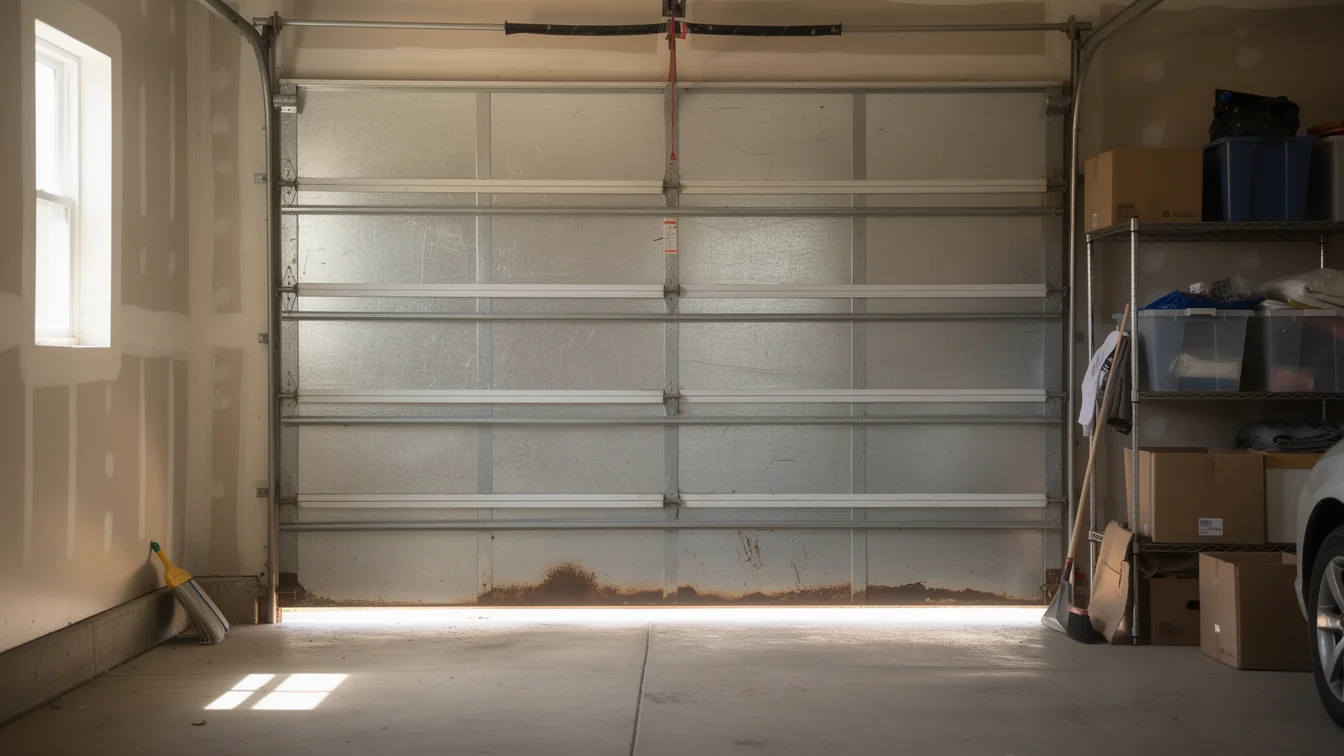
The common assumption is that an uninsulated garage door is a defect, something installed wrong. In Santee it's usually just the age of the house talking. Median build year here lands around 1976, with most of the stock going up between 1967 and 1992, well before insulation requirements for garage doors tightened. A single-layer steel or wood panel door was standard practice then, not a corner cut. So if you pull into a Santee neighborhood built in that window and see a thin, non-insulated door, that's the house doing exactly what it was built to do. The mistake is treating it like a repair problem when it's really a specification problem - the door matches the era, not a flaw in it. People also assume insulation was always optional cosmetics. It wasn't optional later because code changed; it was simply not required when these doors went in. Knowing that changes the conversation from 'something's wrong with my door' to 'my door is original equipment from a different rulebook.'
Doing Nothing For Now
Here's the honest part: in Santee's mild temperate climate, an uninsulated door from a 1970s build isn't an emergency. You're not fighting the kind of temperature swings that make insulation a safety issue, so a door that still rolls smoothly, seals reasonably at the bottom, and isn't sagging on its hinges can keep doing its job for a while longer. We won't tell you to replace a working door just because it predates current code - that's not a repair, that's a sale, and we don't push those. If the panels are straight, the springs are sized right, and the opener still reverses on contact, there's no safety case for touching it. The case for upgrading comes later, from wear, not from the calendar. Where we draw the line is function: rollers binding, a track pulling from the jamb, a panel starting to flex. Those get fixed regardless of insulation value. But cosmetic or thermal reasons alone, on a mild-climate house, aren't urgent.
How Local Conditions Play In
Santee sits in a mild temperate band, so the pressure that drives other regions toward insulated doors - hard freezes, big summer-to-winter swings - isn't the daily reality here. That's part of why so many original 1970s-era doors on this side of town are still in service: the climate never forced the issue the way it would somewhere with harsh winters. It also means that when we do recommend an insulated replacement, it's rarely about comfort inside the garage and more about noise, dent resistance, or a heavier gauge steel holding up better over decades. With 51,408 owner-occupied houses across the service area, a large share built in that same 1967-1992 window, the pattern repeats across the 22 named areas that make up this housing stock - same era, same original door spec, same mild weather that let it last this long without demanding an upgrade.
What Is Going On
What's actually going on is a timing mismatch, not a defect. The median Santee house was built in 1976. Garage door insulation requirements most homeowners reference today came later, so a huge share of original doors in this service area simply predate the rule they're sometimes measured against. That's not unique to one street - it's the pattern across the 1960s-70s stock that makes up most of the local housing. When we go out on a call and find a 40-plus-year-old uninsulated door still on its original track, we're not surprised, and it's not automatically a replacement conversation. We check hardware wear, spring cycle life, and panel condition first. If those check out, the door can keep earning its keep. If the springs are shot or the panels are failing, that's when insulation becomes part of the replacement decision rather than the reason for one.
Frequently asked questions
Is my garage door too old if it has no insulation?
Not necessarily. Most Santee houses were built between 1967 and 1992, before insulation requirements for garage doors were standard, so an uninsulated door is often original equipment, not a sign of neglect. Age alone isn't a reason to replace it if the hardware and panels are still sound.
Does Santee's climate make insulation urgent?
No. Santee sits in a mild temperate band, so the swings that push other regions toward insulated doors aren't a daily factor here. We size insulation recommendations around noise and durability more than temperature control for most local homes.
Should I replace a working 1970s-era door just to meet current code?
We don't recommend that. Code applies going forward to new installs, not retroactively to a door that's still functioning. If springs, rollers, and panels are in good shape, there's no safety reason to swap it out early.
What would actually push you to recommend replacement?
Wear, not age. Cracked or warped panels, a spring near the end of its cycle life, or a track pulling loose are the real triggers. On an original door from the 1967-1992 build era, those issues show up eventually - that's when replacement makes sense.
Related garage door services in Santee
More garage door guides
Book garage door service in Santee
Call now or request a quote - tell us what the door is doing and where you are.