
Santee, CA · Garage Door Service
Garage Door Work in Winter Gardens, Built Around 1977
Garage door repair for Winter Gardens homes built around 1977, serviced from Santee, 4 miles away. Springs, openers, and track work on the hardware this era actually has.
- Repairs & new doors
- Springs & openers
- Serving 5 nearby communities
What Was Built Here
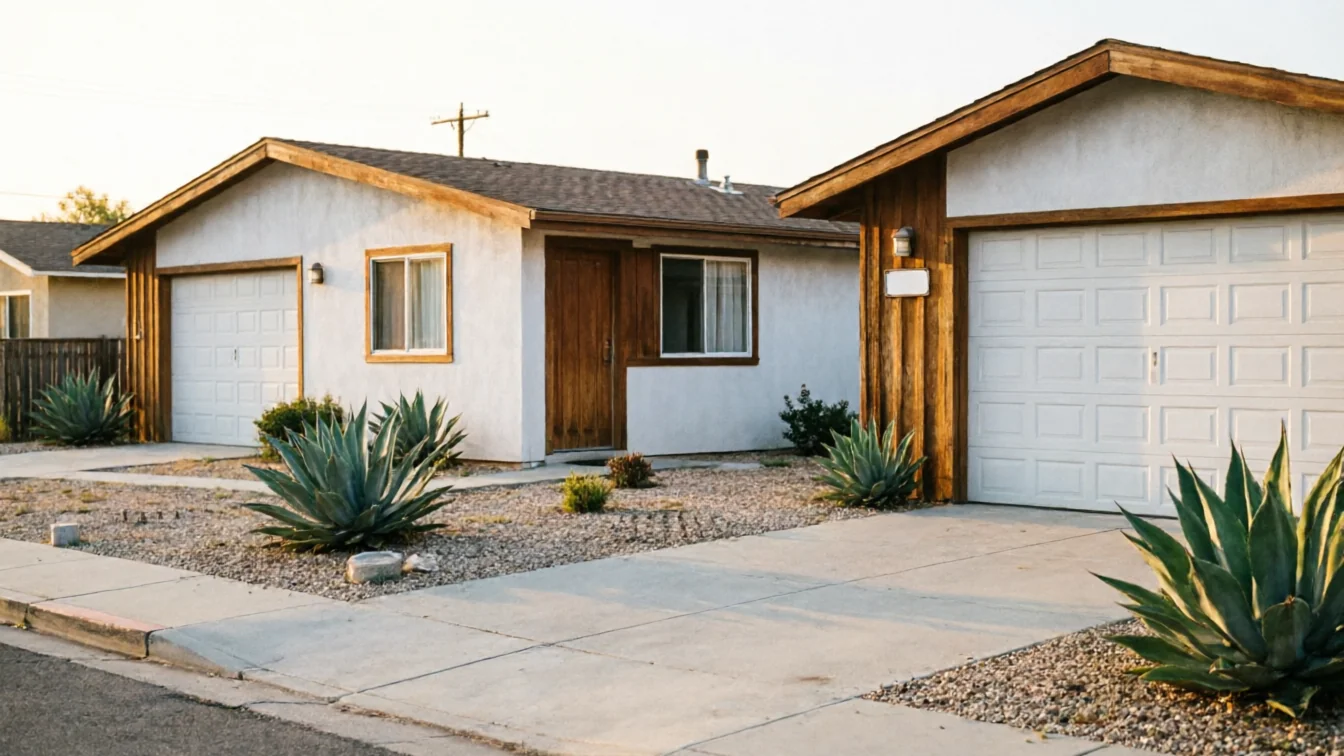
Winter Gardens sits about 4 miles from our Santee shop, and the houses here cluster around a median build year of 1977 - a touch newer than some of the stock across the wider service area, where the median runs closer to 1976 across homes built between 1967 and 1992. That decade matters more than people think. A house built in '77 usually has an extension-spring setup or an early torsion conversion, steel panels instead of the older wood sectional doors, and an opener bracket pattern that was standard for maybe fifteen years before manufacturers changed the mounting spec. If your door still has its original hardware, it's pushing fifty years old, which is past the end of life for springs and most openers regardless of how well they were maintained. We see a fair number of first-generation chain-drive openers out here still limping along, and a lot of galvanized torsion springs that have never been replaced.
What People Here Rings About
Mid-70s torsion setups are the call we get most from this part of the service area - a spring that finally gives out after decades of cycles, usually with the door slamming down hard or refusing to lift past a foot. Second most common is the opener itself: original or first-replacement units from that era used drive systems and logic boards that nobody stocks parts for anymore, so once the circuit board goes, it's a full swap, not a repair. We also get calls about rollers and track alignment on steel doors that have warped slightly over the years, especially where the mild temperate climate out here means doors don't suffer thermal expansion the way they would somewhere with real seasonal swings, but decades of salt air and dust still take a toll on hardware.
Where We Stop
We travel from Santee, about 4 miles to Winter Gardens, and that's close enough that most calls get a same-day visit, but we're not based in the neighborhood and we don't keep a standing crew parked here. If a part isn't on the truck - and for openers this old, that happens - there can be a wait while we source it, since manufacturers quit making boards and drive assemblies for units from the late 1970s. We also don't do anything with the structural opening itself; if a door frame has settled or shifted enough that the door won't square up, that's a carpentry or foundation call, not a garage door one, and we'll tell you that straight instead of forcing a fix that won't hold.
How That Shows Up in the Door
Put it together and a typical Winter Gardens service call looks different from a call in a neighborhood built in the 1990s or 2000s. Here, we're usually diagnosing fatigue in original hardware rather than a defect in something new - a spring cycling past its rated life, a steel panel with surface rust at the bottom seam, an opener whose capacitor or gear set has simply worn out after thirty-plus years of garage door work. Replacement often ends up cheaper than repair once we're into sourcing obsolete opener parts, and we'll say so rather than billing for a patch job on something that's going to fail again in six months. The upside of the mild climate out here is that the doors themselves - the steel, the wood trim on older ones - have held up structurally better than they would in a place with real freeze-thaw cycles or heavy humidity; it's almost always the moving hardware, not the door panel, that gives out first.
Frequently asked questions
How far is Winter Gardens from your Santee location?
About 4 miles. We travel out from Santee for service calls in Winter Gardens; we don't have a separate shop or depot in the neighborhood itself, just a short drive from our home base.
Why does my 1970s opener need a full replacement instead of a repair?
Openers from that era used drive boards and gear sets that manufacturers stopped producing decades ago. Once the circuit board or motor fails, there's often no replacement part to source, so swapping the whole unit ends up being the only real option.
Are original torsion springs from the 1970s still safe to use?
Torsion springs are rated for a number of open-close cycles, not years, but a spring installed in the late 1970s has almost certainly exceeded that cycle count regardless of how well it was maintained. We'd check it in person rather than guess over the phone.
Does the mild climate here mean less wear on garage doors?
It helps with the door panel itself - less expansion, contraction, and rust than you'd see in a harsher climate. It doesn't do much for moving hardware like springs, rollers, and openers, which wear out from use and age no matter the weather.
Garage door services in Winter Gardens
Every service our crew runs in Winter Gardens, CA.
Book garage door service in Santee
Call now or request a quote - tell us what the door is doing and where you are.