
Santee, CA · Garage Door Service
When a Spring Goes in Cold Weather Here in Santee
Why torsion springs in Santee homes built between 1967 and 1992 are more likely to snap on a cold morning, and what that means for your repair call.
- Repairs & new doors
- Springs & openers
- Serving 5 nearby communities
What Most People Get Wrong
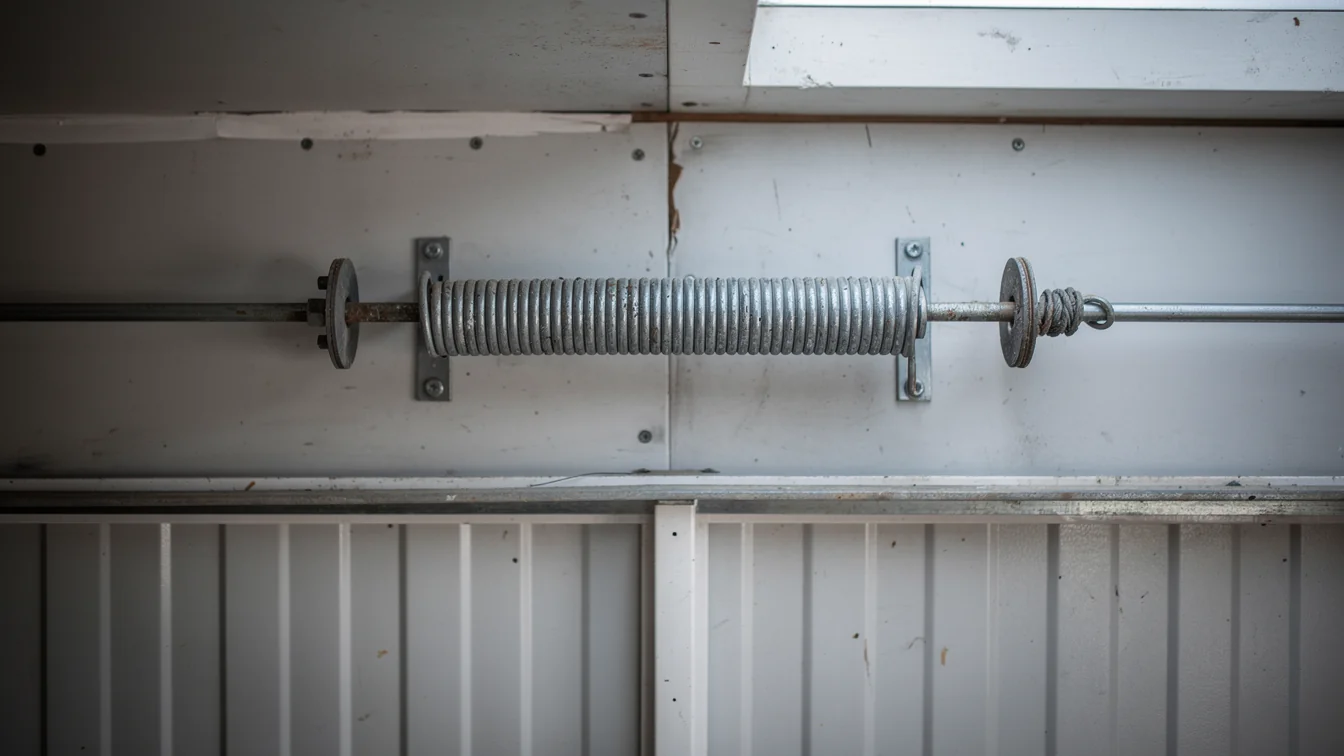
Most homeowners assume a broken spring is a summer problem, something that happens when the garage bakes all day and the metal expands. Around Santee that's backwards. The steel in a torsion spring is under constant tension, and tension plus a sudden temperature drop is what actually snaps it. A lot of the houses out here went up between 1967 and 1992, with the median build year sitting around 1976. That means a big share of the springs still on these doors are original, or close to it - 30 to 50 years of daily cycling on the same coil. Metal that's already fatigued from decades of lifting a 150-pound door doesn't need much of a push to let go. A cold snap is enough. People think the spring "just broke" out of nowhere, but it was already most of the way there. The other mistake is waiting for a second warning sign. There usually isn't one. The door works fine on Tuesday and won't budge Wednesday morning.
Doing Nothing For Now
If your spring hasn't broken yet but you heard a bang, a pop, or noticed the door feels heavier than it used to, doing nothing is a real option for a while - just not forever. A door that's starting to sag on one side can usually still open and close for days or weeks before the spring actually lets go. What you shouldn't do is keep running the opener on a spring that's clearly fighting it, because that's how you end up with a cable jumping the drum or a bent track on top of the spring job. If the door is original to a house built in the 1970s or 80s, which is common across this area, the honest move is to get it looked at before winter mornings start, not after. I won't tell you every noisy door needs a same-day call. Some don't. But a door that's gone quiet and heavy, on hardware that's 40-plus years old, is not a wait-and-see situation.
How Local Conditions Play In
Santee sits in a mild temperate band - we don't get hard freezes, and that's exactly why people get caught off guard. There's no expectation of cold here, so nobody's thinking about how a 40-degree morning affects a 45-year-old spring. But steel doesn't need a freeze to contract and lose a little flexibility. A spring that's already worn thin from decades of cycling can go right at that overnight temperature drop, even in a climate that never sees frost. Compare that to the newer construction scattered through some of the surrounding areas - Eucalyptus Hills, Bostonia, Winter Gardens - where more recent doors and springs have fewer cycles on them and more give left in the metal. Older stock concentrated closer in doesn't have that cushion. It's not that the weather here is harsh. It's that the hardware has had 40-50 years to get tired, and a mild cold morning is often the thing that finishes the job.
What Is Going On
When a spring breaks, what's actually happened is the coil has reached the end of its fatigue life and a small added stress - usually a temperature swing - was the last straw. On a double door that's two springs working together, and if one goes the other is usually not far behind since they've carried the same load for the same number of years. This matters for how you plan the fix: replacing just the broken one on a door this old often means a mismatched pair, one tired and one new, which tends to call you back within a year. On original hardware from the 1967-1992 era that's common through this area, I usually recommend replacing both at once rather than patching the one that failed. It costs more up front and saves a second service call later. That's a judgment call based on age and wear, not a hard rule for every door - a door replaced or re-sprung in the last decade doesn't need this.
Frequently asked questions
Why did my spring break on a cold morning when Santee doesn't really get cold?
You don't need a freeze for a tired spring to fail - a 40-degree drop overnight is enough to stress steel that's already fatigued from decades of cycling. A lot of Santee doors date back to the 1967-1992 building era, so the spring is often original and simply at the end of its life when that cold morning hits.
Should I replace one spring or both?
On a door with original hardware from the 1970s or 80s, I usually replace both even if only one broke, since the other has carried the same load for the same number of years and is close behind. On a newer door with a recent spring job, replacing just the failed one is fine.
Can I keep using the opener if the door feels heavy but hasn't broken yet?
For a short while, yes, but a heavy or sagging door is already stressing the cables, drums, and track, not just the spring. If the door is original to an older Santee house, get it checked before the cold months rather than running it until it fails.
Is this an emergency or can it wait?
A door that's gone quiet and heavy on old hardware shouldn't wait long, but it's rarely a true same-day emergency unless the door is stuck open or a cable has jumped the drum. I'll tell you honestly on the call whether it needs to move up the schedule.
Related garage door services in Santee
More garage door guides
Book garage door service in Santee
Call now or request a quote - tell us what the door is doing and where you are.